Born from Stars: A Journey Through Time, Legends, and Science

Updated: May 25, 2025
“We are made of star stuff” ~ Carl Sagan
The famous Astronomer and science communicator once said “We are made of star stuff.” meaning that we and everything around us—including you, me, the plants, the oceans, even the device you're reading this on—is made of elements made in the hearts of dying stars.
YES! The stars that we see twinkling in the night sky, stars just like those made us and everything around us possible. That idea alone is so breathtaking that the twinkling dots we admire in the night sky they're part of our story, of our creation.
Through this blog let’s learn about the stars, their history, significance, and our understanding, because maybe when we try to understand them, we’ll end up learning more about us too.

History & Mythology of Stars
Let’s start at the very beginning!
We have all heard about the famous theory of the “Big Bang” which started it all. Even after the Big Bang, it took nearly 100 to 250 million years for the first stars to form.
Ever since the Big Bang, the universe has been steadily cooling. Eventually, it became cool enough for hydrogen and helium atoms to form. Over time, gravity caused these atoms to clump together into dense clouds. As these clouds grew, the pressure and temperature at their cores increased over millions of years—until, finally, the conditions were just right for nuclear fusion to begin. And with that, the first stars were born.

The earliest stars are known as POPULATION III stars. Since they formed in the very beginning when the universe was made of only hydrogen and helium, they were made from metal-free gas clouds. These stars burned through their fuel rapidly and ended their lives as supernovae that caused the massive explosions that helped enrich the early universe with heavier elements like carbon, oxygen, and iron.
And this is how the elements that make us were formed—from dying stars.
This cycle of star formation and death is continuous. Each time a star dies, it creates and disperses heavier elements into the universe. Around 10 billion years after the Big Bang, the conditions and ingredients were just right, and life finally emerged on Earth.
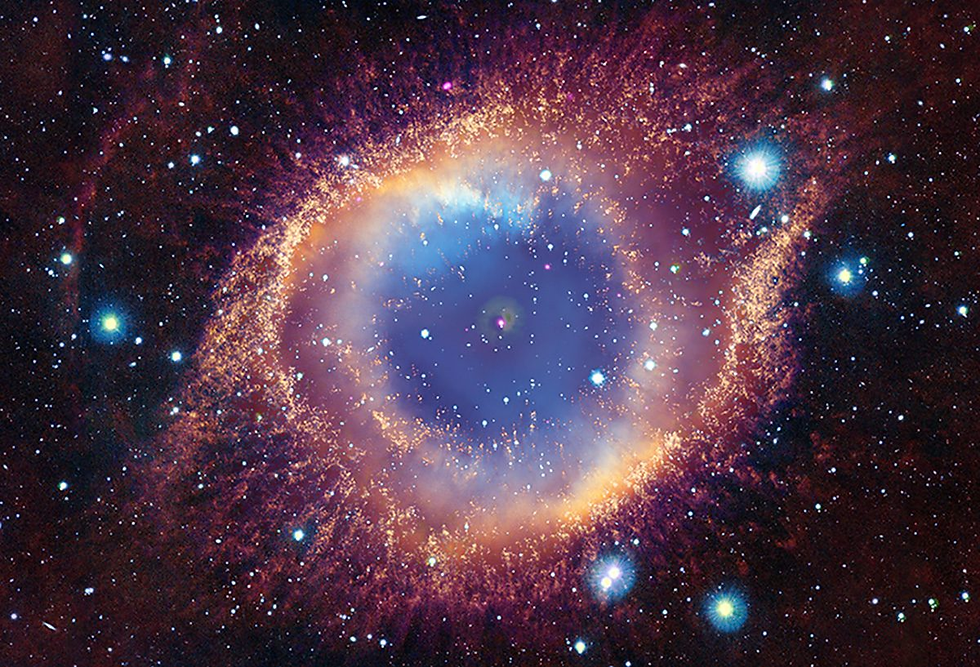
Stars have always held deep significance in human life.
Before we dive into how they matter to us today, let’s take a moment to appreciate how our ancestors valued them—looking up at the night sky not just with curiosity, but with reverence, imagination, and wonder.
Long before telescopes or physics, humans looked up at the stars and found meaning in their patterns. Across the globe, civilisations created their own stories about the stars they saw in the night sky. They connected them into constellations, formed legends, and wove the stars into myths about gods and goddesses—using the sky as a canvas to understand their own lives.

Sailors used stars to navigate vast oceans. Farmers watched them to mark seasons and guide planting. And storytellers passed on knowledge and wisdom through the stars—making the night sky not just a spectacle, but a guidebook for life.
Egyptians

The Egyptians closely observed Sirius (the dog star). Its helical rising (when it first appears on the horizon just before sunrise) occurred just before the annual flooding of the Nile River. This flood was essential to Egyptian agriculture, renewing the soil’s fertility. Because of this, Sirius was seen as a symbol of renewal. The flooding marked the start of their new year and was tied to many religious ceremonies. In the constellation Orion, the Orion’s belt stars were thought to be the soul of Osiris (Egyptian lord of the dead and the underworld) in the sky. This linked the stars with Egyptian beliefs about death and rebirth, making the stars sacred and eternal guides for the dead.
Greeks

Ancient Greeks believed stars were the eternal flames of the gods, placed in the heavens as symbols of immortality. Stars represented divine presence, shining light on the mortal world.
The Greeks crafted many stories around the star patterns they saw. For example, Orion was a giant hunter who was placed in the sky by the gods. Taurus, the bull, was connected to the legend of Zeus transforming into a bull. These stories often explained natural phenomena or human traits through divine narratives.
Hindu Astronomy

Hindu astronomy divides the sky into 27 Nakshatras (lunar mansions), which are segments of the zodiac the Moon passes through during its monthly orbit. These were crucial in astrology and timing of religious rituals, marriages, and other life events. Each Nakshatra is associated with a specific star or group of stars and many stars are linked to deities. For example, Aldebaran, the bright red star in Taurus, is called Rohini in Hindu tradition—associated with the goddess Rohini, who is considered the favorite consort of Lord Krishna. Such connections blend astronomy with spirituality and mythology, deeply influencing culture and worship.
Ever since then, humans have come a long way
Then in 1608, Hans Lippershey invented the telescope! Galileo Galilei was the first person to point a telescope to the sky and discover the true scientific beauty of our universe. Scientific advancements since then have helped us uncover so much more about stars. Techniques like spectroscopy allow us to find out the composition of the stars, and learning about the processes of nuclear fusion helps us better understand the events going on inside the core of the stars.
Life cycle of Stars

All star formations start in the stellar nebula (a massive cloud of gas and dust). Gravity causes gas and dust to collapse on itself. As more mass gathers, the pressure and temperature at the core rise steadily, forming what we call a protostar.

When the conditions reach just the right threshold—enough mass, pressure, and heat—nuclear fusion ignites in the core. And just like that, a star is born. This is called the main sequence star when the nuclear fusion starts and the stars becomes stable, it’s the longest stage of a stars life, and our sun is also in this stage.
Once a star runs out of its primary fuel (hydrogen) its fate depends on its mass
That’s already a lot of info for one blog—but honestly, it’s still just a tiny piece of everything there is to know about stars. And maybe that’s what makes the universe so amazing. There’s just so much out there, and all of it connects in ways that are kind of magical.
Have you ever thought about the beauty of gravity that helped in the formation of so many things? How it caused the gases and dust to collapse to form the first stars and how it causes supernova explosions that help in spreading out the elements in space THAT MAKE US.
The universe is a magical place we live in and to exist is such a wonder.
Since the beginning of time, humans have been trying to figure out where we come from and why we’re here—and honestly, I think that’s a journey worth sharing.
So if you’re as fascinated by space and science as I am, stick around! I’ll be sharing more fun, weird, and wonderful science facts that help us understand not just the universe, but maybe even ourselves a little better.

Sanvi, I loved how you blended mythology, science, and curiosity into one cohesive narrative.
Your voice as a writer shine through, making complex ideas feel approachable and meaningful.
Keep exploring, keep writing, the journey has just begun!